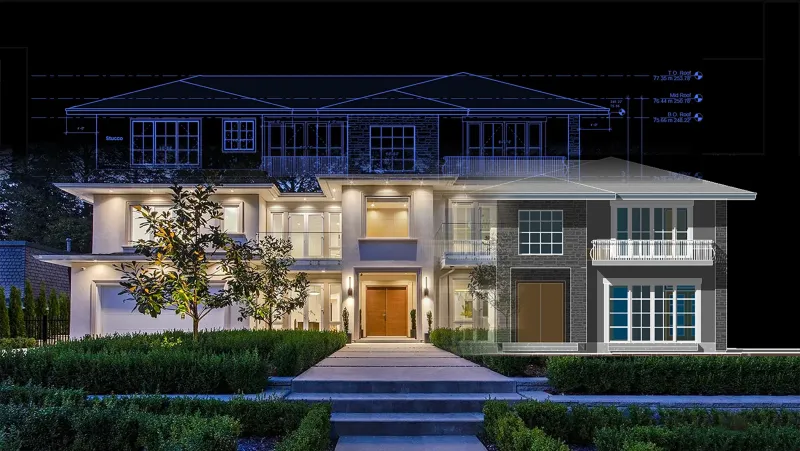
Defining Your Vision
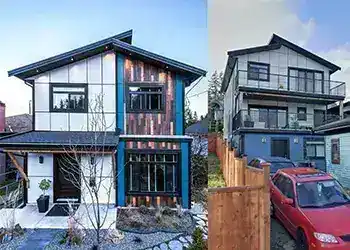
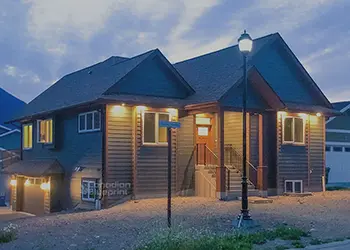
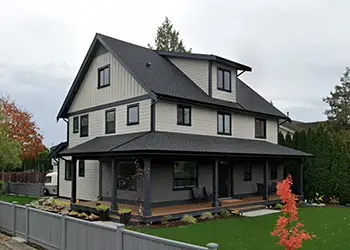
Building a custom home begins with translating your list of "must-haves"—such as the number of bedrooms, inclusion of a legal secondary suite, or a specific architectural style (Modern, Craftsman, Rancher)—into a functional design. We start every project by establishing a clear design brief that aligns your lifestyle goals with your target construction budget. (Read our custom home and multiplex design guide for a deep-dive workflow overview).
Site Analysis & Zoning Review
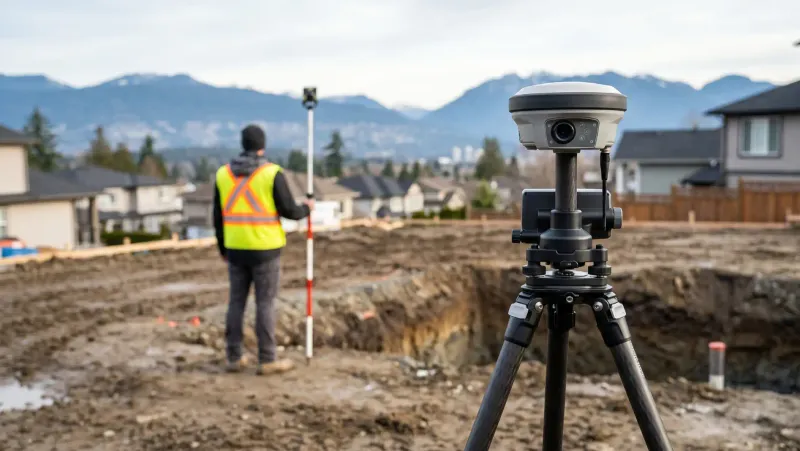
Before we draft any floor plans, we conduct a rigorous site analysis. A topographic land survey is an absolute requirement for any new build in BC. We cross-reference this survey with your local municipality's zoning bylaws to determine your maximum allowable floor space ratio (FSR), building height, and lot coverage.
Hidden Restrictions: Right of Ways and Covenants
Many lots in BC have hidden legal restrictions registered on their title.
- Right of Way (ROW): A legally granted area on your property where a utility company or municipality has the right to access underground pipes or power lines. You cannot build a permanent structure over a ROW.
- Covenant: A registered agreement that can restrict the height, design, or placement of your home. For example, a covenant might dictate that trees in a specific area cannot be cut down, or that the roof must not exceed a certain elevation to preserve a neighbor's view.
We check for these restrictions immediately to ensure your design is viable.
Foundations & Geotechnical Needs
One of the first structural decisions is whether to build a full basement, a crawlspace, or a slab-on-grade foundation. This decision is often dictated by the soil conditions on your lot. In many areas of the Lower Mainland, a Geotechnical Report is required before making a decision. A geotechnical engineer will test the soil bearing capacity and water table depth, instructing our structural engineers on how to properly design your foundation to prevent settling.
The Future is Efficient: BC Energy Step Code
British Columbia has committed to a "Net Zero" target by 2032 through the BC Energy Step Code. This regulation drastically impacts the design, materials, and construction costs of your new home.
New custom homes must meet specific energy efficiency steps (often Step 3, 4, or 5 depending on the municipality). This requires us to design a highly insulated building envelope, specify high-performance windows, and coordinate with an Energy Advisor to model the home's heating and cooling loads (following the new overheating protection and CSA F280 requirements) before the permit application is even submitted.
Step 1: Define Your Vision
We meet to discuss your lifestyle, aesthetic preferences, and budget, establishing the core requirements for your new home.
Step 2: Site & Zoning Analysis
We review your land survey and land title, identifying zoning limits, Right of Ways, and Covenants that will dictate the building envelope.
Step 3: Geotech & Foundation Strategy
We coordinate a geotechnical review (if necessary) to determine the safest and most cost-effective foundation type for your soil conditions.
Step 4: Energy & Architectural Design
We develop the full architectural permit drawing package—including 3D models and structural coordination—while ensuring the design hits the mandated BC Energy Step Code targets.
Step 5: Submit for Permit
Once the design is complete and all engineering schedules are signed, we assemble the application and manage all communication with the city's plan checkers to secure your building permit.
Canadian Blueprint Inc.
BC Building Design & Permit Drawings
Published July 21, 2025